Feeds:
Posts
Comments

While the weather continues to present us here on Eastern Brothers Island with, what could be referred to as, unpleasant conditions, I am coming to believe that it is for a couple of reasons.  One of those reasons is: bad weather is good for the social community.  If there wasn’t sloppy weather, I dare say that some Mainer’s wouldn’t have much else to talk about.     Fog, rain, and stiff north winds, while easy to complain about, are what makes us tougher.  Here is a photograph of what it’s like on the island in foul weather.

Image

Eastern Brothers Island in foul weather

Now this is the more important reason why I believe we have gray days: foul weather makes you appreciate the good days more.  After spending a day inside a 12 by 16 foot cabin staring out into a gray abyss and then going outside periodically only to completely drench my attire, I found that once the sun did shine the island was even MORE glorious than before.  Here is my proof:

Image

Eastern Brothers Island in all its glory

On our good days over the past week or so we have spent hours scanning the seas for alcids and have also become familiar with some of the local lobster boats.  Eastern Brothers Island is an island that Maine Coastal Islands National Wildlife Refuge is hopeful in establishing a razorbill, puffin, and tern colony on.  We have seen quite a few razorbills in the adjacent waters, including 40+ foraging, but more typically see one or two closer to the cliffs.  While not scanning for alcids, we are also working on learning to identify our islands plant community.  Essentially we live on a bog.  Western Brothers is covered, literally covered, with cranberries.  We also have cloudberry, white cotton grass, and Artic Blue Flag irises; species associated with northern climates.  

Image

A hand full of mouth-puckering goodness straight from our bog

Image

Looking an iris in the eye

Image

Black Guillemot eggs in crack on Western Brothers Island

On a parting note for this week, we just got back from a black guillemot burrow search and were very excited to find eggs in cracks and crevices and tiny dark holes all over the cliffs.  Above is a typical burrow crack.


It’s time to find out just what our gulls have been up to since we attached GPS tags.  In our first round of tagging, we sent out five tags on five separate Herring Gulls.  The tags we used are useful because they are lightweight, but they don’t transmit the data directly to us. Instead, we have to catch our gulls again.

We started by watching the nest. Both gull parents will help incubate the eggs, trading off throughout the day. The gull not on the nest generally heads out to forage for food. However, we only tagged one gull from each nest, so it’s important that we only set the trap up when the right gull of the pair is taking his or her turn at incubation. Thankfully, the GPS tags are easy to see from a distance.

Once we know the right gull is in the area, we set the gull trap up, just like before. We were hoping they wouldn’t get trap shy and refuse the sit on their eggs when the trap was present. Luckily, our first tagged gull was caught less than an hour after we set up the trap!

Success!

Success! A Herring Gull in a box trap

The tags were removed by cutting off the small tuft of feathers to which they were taped. Don’t worry – birds regularly replaced their feathers, so the cut ones will fall out and be replaced with new ones.

After downloading the data from the tag, what we found was pretty cool: our first gull’s foraging trips were more than 15 miles long. She stuck to the mainland coast, mostly between St. George and Rockland. Her trips sometimes took her more than four hours!

Gull 3 Map

The foraging routes of our first recaptured gull

In the end, we recovered three of the first five tags we sent out, and none of the gulls followed the same paths. One gull went straight up to Warren, ME several times over a few days. That’s a round-trip distance of almost 40 miles. We think he might have been looking for spawning alewives.

Gull 4 Map

Our second gull made a beeline for Warren every time!

The third gull stayed local and barely left the waters around Metinic Island – it looks like she preferred feasting on the spawning polychaete sand worms just offshore.

Gull 3 must have found plenty to eat in her own backyard

Gull 3 must have found plenty to eat in her own backyard

We also lost two tags – the gulls managed to pull them off, so it looks like we need to come up with a new way to attach the tags. Our next step is to design a harness for the tags that the gulls can’t rip or tear. Hopefully we’ll have more news about our wandering gulls before the season is over.

Metinic also has plenty of terns and guillemots – expect to start hearing about them soon!

-Amy

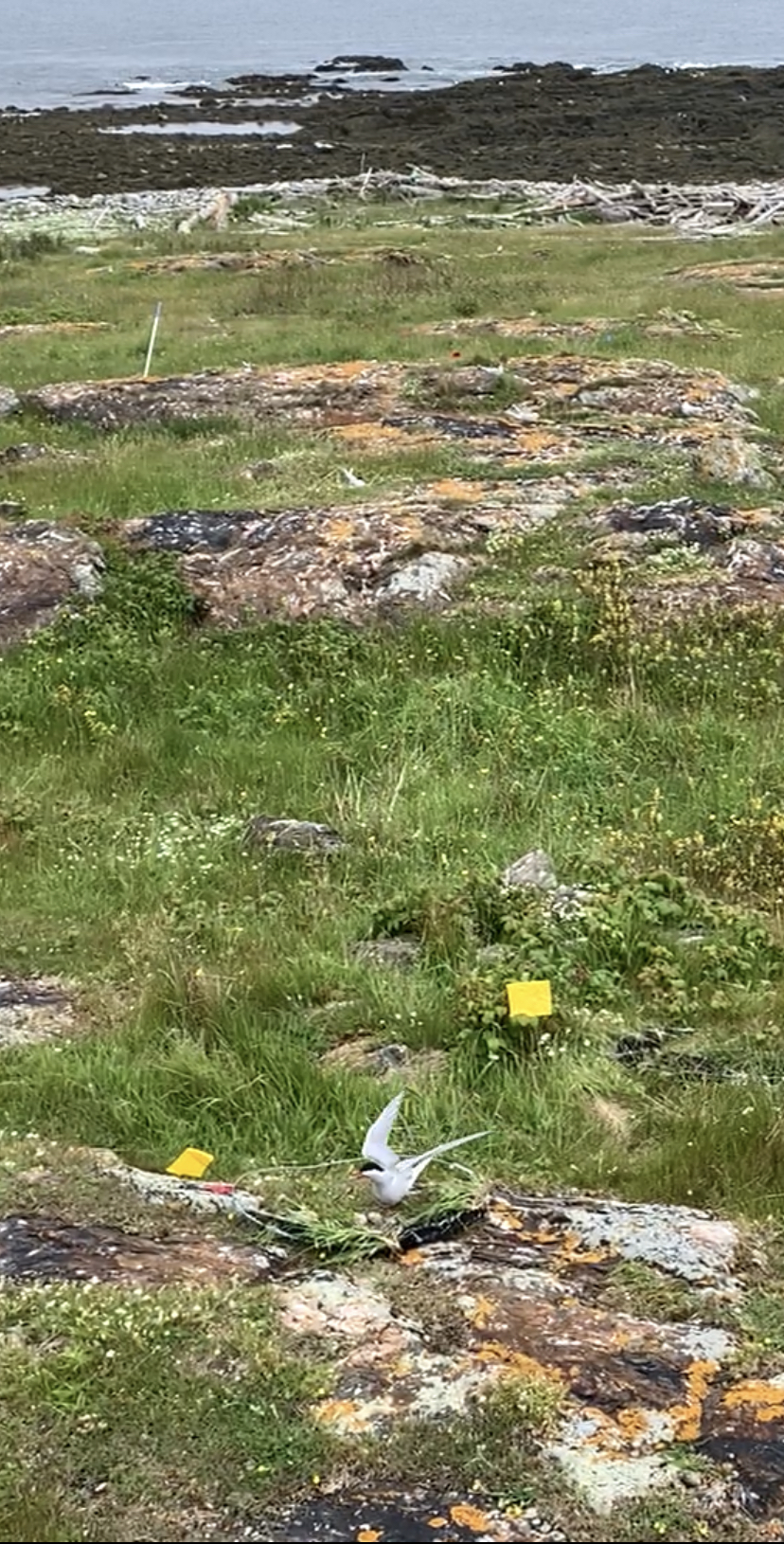
Common Tern on Nest

Common Tern sitting down gently on her clutch of eggs.

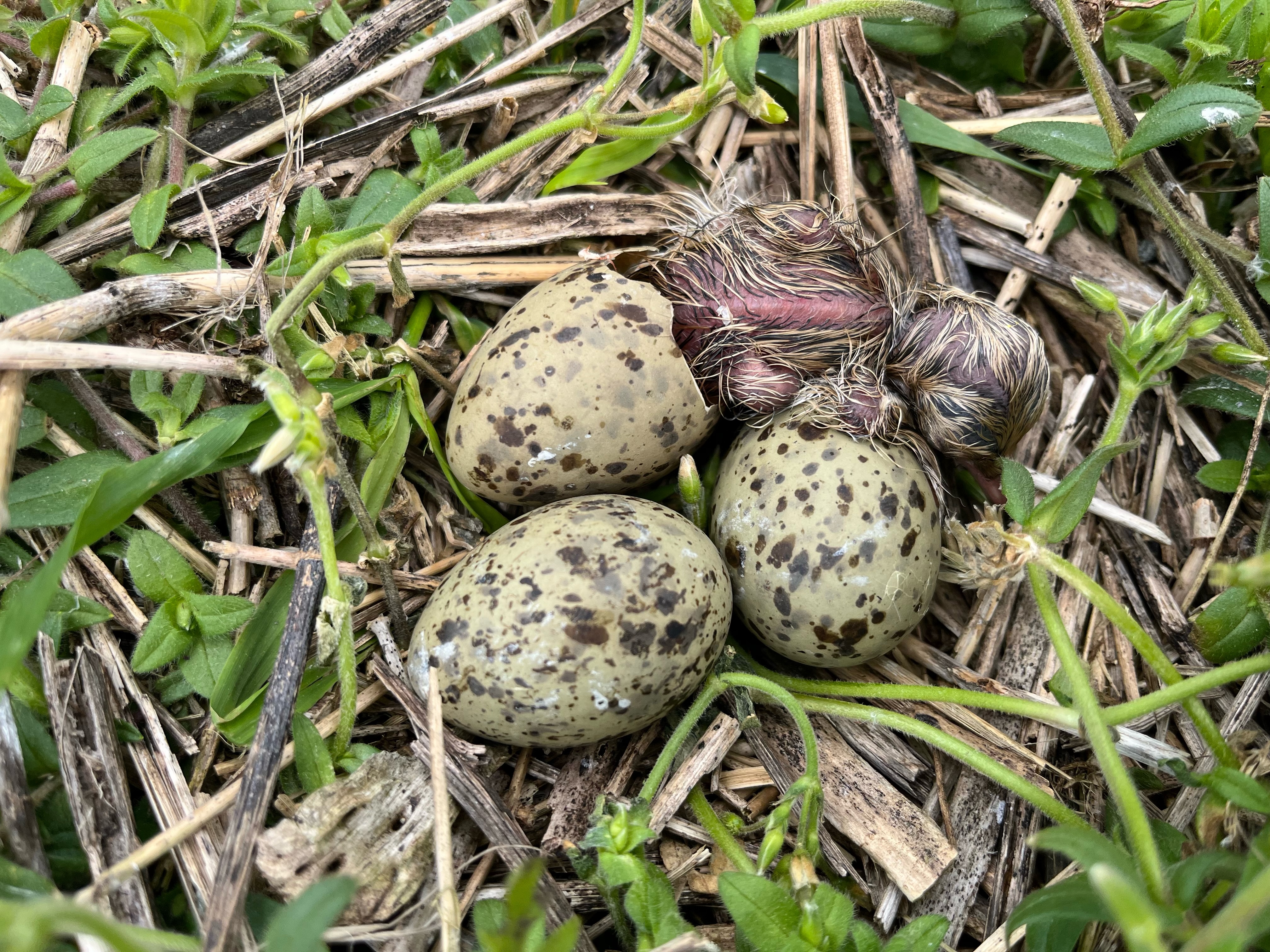
Hello again from Ship Island! Last Friday, the 15th, we conducted an island-wide Common Tern census to determine just how many birds and nests we have here on Ship. Conducting a census involves several people walking together in a line, looking for and recording every active nest. At the completion, we took turns guessing how many there were and came up with numbers like 300 and 350. To our astonishment, after all the corrections were applied, we ended up with a whopping 436 nests! This is 185 nests more than last year, and they are still laying. Needless to say, the Ship Island colony is growing and thriving. We even spotted a four-egg clutch! Normally, Common Terns lay between 1-3 eggs, so finding a 4-egg nest is unusual. 

Four-egg Clutch

Four-egg clutch! We have very productive Terns.

In other exciting news, we have seen 3 clutches of Mallard ducklings already, and yesterday spotted our first Common Eider ducklings! I stumbled upon some mallards in the marsh and couldn’t help snapping a quick photo before letting him run off after his family. 

Mallard Duckling

A wet little mallard duckling from the marsh.

Yesterday we had an Osprey fly right through the tern colony with a fish in his talons. Osprey don’t prey on terns, and he was already packing his lunch, but the terns mobbed him away just the same. He hurried right out of there as fast as he could go!

Osprey

Terns chasing away a startled Osprey!

You’ve seen them on docks. You’ve seen them on dumpsters. They eat fish, french fries, and everything in between. But where do all these gulls come from? And where do they go once they’ve finished their lunch?

 Gulls can be found just about everywhere there’s water (and plenty of places where there isn’t). There are plenty of them around, and they’ve gained a reputation as garbage-eating pests.  But there’s way more to a gull than dumpster diving.

Some gulls, like this Great Black-backed Gull, are actually quite handsome! - Photo by Zak

Some gulls, like this Great Black-backed Gull, are actually quite handsome! – Photo by Zak

First of all, gulls are actually cousins of the terns we’re working so hard to protect out on these islands, and these cousins have a lot in common. Both terns and gulls prefer to nest in large colonies, and lay their eggs in nests on the ground. They’re both strong fliers, capable of traveling long distances over the ocean (although nothing quite tops the pole-to-pole migration of the Arctic Tern).  Males and females of both tern and gull species are almost identical (although males tend to be a little bigger) and both parents work together to raise their chicks.

So why have gulls done so well when terns are in trouble? It all comes down to food. Gulls are opportunistic – they’ll eat anything. Terns are picky eaters – they generally only eat fresh-caught food they pluck from the water themselves. Like a tern, gulls also love fish. But they’ll also eat mussels, urchins, crabs, and in recent years, human refuse. They’ve learned to follow fishing boats, flock to open dumpsters, or sometimes snatch food right out of people’s hands. So gulls have thrived on these new abundant food sources, while terns have been struggling.

A Herring Gull, Metinic's most common gull - Photo by Zak

A Herring Gull, Metinic’s most common gull – Photo by Zak

But we and the Refuge have been wondering, where exactly do Refuge Island gulls get their food? Does a gull here on Metinic fly all the way to the mainland for a meal? Or do they stay local and snack in the intertidal zone? This year is the pilot year of a study to answer those very questions with the help of GPS.

So, what’s the plan?

Step 1: Catch a gull.

The best way to do this is on the nest. The setup is simple enough: the gull sits on a string tied to a wooden prop. The prop separates into two pieces and the box falls down, capturing the gull. We replace the real eggs with wooden ones so they won’t accidentally get crushed. Sounds easy enough, right? Maybe not.

Some people call gulls rats with wings – and it’s not a total misnomer. Both rats and gulls are a lot smarter than many people think.  It took us several hours of trapping to catch our first Herring Gull.

Catch me if you can!

Catch me if you can! AKA, Gulls – 3, Biologist-0

Step 2: Attach a GPS Logger

These little boxes, called igotU tags, are programmed to take a GPS reading every 3 minutes for about 4 days. To attach one to a gull, we put it in a waterproof casing then tape it to the gull’s back feathers with extra strong tape. The tag is light enough that it won’t hinder the gull when it flies, and hopefully the tape will keep the gulls from preening the tag off.

igotU tag getting taped to a Herring Gull's back - Photo by Amy

igotU tag getting taped to a Herring Gull’s back – Photo by Amy

We also band the gull and take a few measurements to determine if it’s a male or female.

Zak checks a GPS tag

Zak checks a GPS tag on a Herring Gull

Step 3: Release the gull!

Amy releasing a tagged and banded Herring Gull - photo by Zak

Amy releasing a tagged and banded Herring Gull – photo by Zak

Step 4: Trap the gull again.

To get the data from the GPS loggers, we have to trap the gull again and remove the tag. Stay tuned for Part 2 to see what we find out!

IMG_1386 (640x427)

A GPS-tagged Herring Gull on its way – Photo by Zak

- Amy

Alcid antics

The field crew here on Petit Manan just concluded two days of Alcid burrow searching along the rocky perimeter of the island. Alcids (Atlantic puffins, razorbills and black guillemots here on PMI) are a group of seabirds that have exchanged some of their flying skills for superb swimming and diving abilities. They nest in natural crevasses and cavities in rocky berms and cliffs and, in the case of puffins, in dug out burrows in sod.

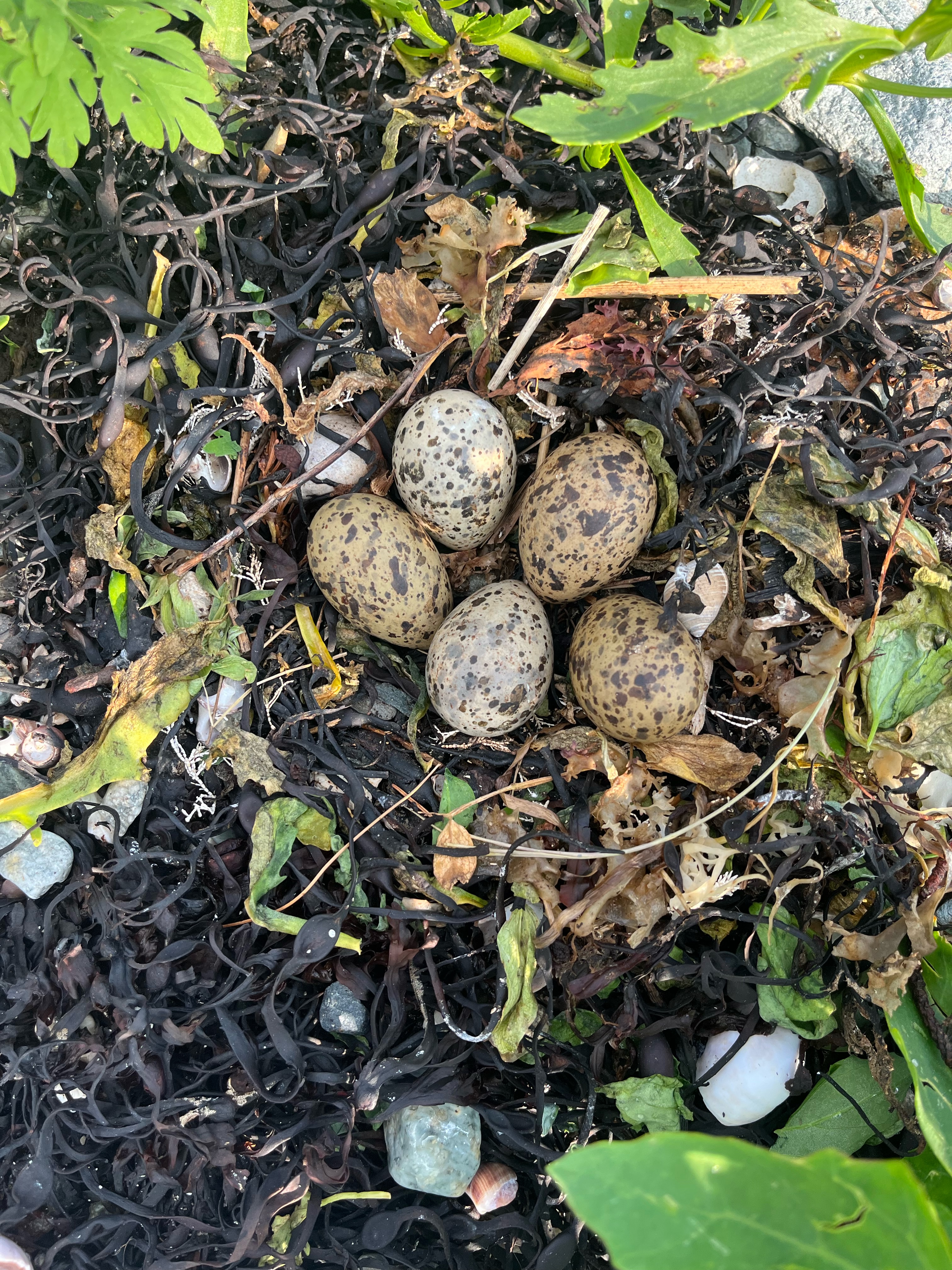
During our search for burrows we discovered a beautiful willet nest on the northwestern side of the island. The nest contained 4 gorgeous eggs; hopefully we can find the chicks when they hatch!

Image

Locating Alcid burrows gave us a good idea of where the puffins, razorbills and guillemots are concentrating their nesting efforts. In a week or two we should start to see the first puffin chicks.

Image

Green Island Census

Petit Manan in the foreground and Green Island, connected to PMI by a rocky bar at low tide.

Petit Manan in the foreground and Green Island, connected to PMI by a rocky bar at low tide.

Last Tuesday, the crew headed over to Green Island, joined by biologists Linda, Sara, and Christa, and two SCA students, to survey the seabirds nesting there. After being dropped on the Northeast side of the island, we were all issued “egg rings,” PVC pipe connecters that are sized to allow herring gull eggs to pass through but not great black-backed gull. We formed a line going from the berm through the vegetation and headed west counting gull and common eider nests as we went along.

Egg ring for determining whether a nest belongs to a Herring or Black-backed Gull

Egg ring for determining whether a nest belongs to a Herring or Black-backed Gull

Common eider nests are hidden in the vegetation and beautifully made from the mother hen’s down feathers. She incubates her clutch of 2-9 eggs for around 25 days, only taking breaks in the evenings to drink and feed. After the first week of incubation females are reported to stay on the nest night and day unless disturbed. They go up to 3 weeks without leaving their clutch!

An eider nest lined with down.

An eider nest lined with down.

Skirting the western edge of Green Island, we found the first great black-backed gull chicks of the season and a Canada goose gosling. As we headed back to Petit Manan along the bar from Green Island we spotted two oyster catchers in the cove. In years past they have nested on Green Island, we are hoping they do so this year as well.

Andrea holding a Black-backed Gull Chick.

Andrea holding a Black-backed Gull Chick.

After a tough summer last year, we’ve been giving the terns of Metinic a little extra space. Zak and I have been minimizing our time in the tern colony itself so that the terns can feel safe and undisturbed. This leaves us with some free time on our hands, so we’ve been keeping busy and satisfying our love of birds by looking for migrating birds in the Metinic woods.

Black-throated Green Warbler - by Zak

Black-throated Green Warbler – by Zak

Reports from previous years included a list of all the species seen on Metinic during each season. We counted them up and found 131 species was the previous record. However (drumroll please)…

As of today, we’ve got a new record: 135 species!

Many of these species are migrants that stop over on Metinic on their way to more northerly breeding grounds. On one single rainy day, we saw 90 species, most of them warblers and other small songbirds in a “fallout” from the bad weather.

NOPAFLY (640x427)

Northern Parula eating a fly – by Zak

To celebrate, here are some of the best photos of our visiting feathery friends. Wish them luck because they’ve still got quite a ways to travel – some are headed all the way to the Arctic!  (Click on the pictures to see them more clearly)

Scarlet Tanager - by Zak

Scarlet Tanager – by Zak

American Oystercatcher - by Zak

American Oystercatcher – by Zak

Black-billed Cuckoo - by Zak
Black-billed Cuckoo – by Zak

Lincoln's Sparrow - by Zak

Lincoln’s Sparrow – by Zak

Yellow Warbler - b y Zak

Yellow Warbler – by Zak

135 birds, and we’ve still got a month and half on the island. We’ll keep you posted as our list grows!

-Amy

Follow

Get every new post delivered to your Inbox.